Travelling in Champagne
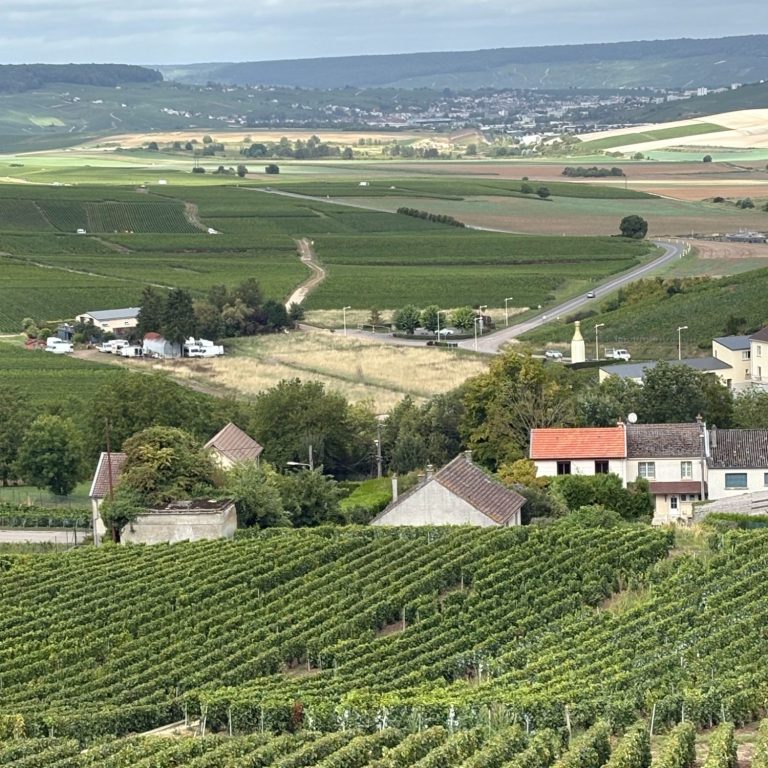
Arriving in Champagne can be surprising. The landscape is understated, almost discreet. No dramatic mountains, no sweeping vistas – yet everywhere there are vineyards, chalk-rich slopes, and small villages where time seems to move more slowly.
Reims and Épernay form the region’s two clear centres. In Reims, history meets the deep cellars of the great houses. In Épernay, Avenue de Champagne unfolds as a showcase of world‑famous names. But it is often in the villages in between that Champagne truly reveals itself.
Here you find the small growers, family estates, and winding roads through the vines. Travelling in Champagne is not about ticking off sights – it is about slowing down, listening, and tasting.
Three things not to miss:
– A walk through the vineyards early in the morning
– A visit to a chalk cellar deep underground
– Conversations with winemakers where passion matters more than prestige
Why Champagne?
There are many sparkling wines in the world. But there is only one Champagne.
Not because the bubbles are more exclusive – but because the place is unique.
Champagne is a landscape shaped by chalk, cool climate, patience, and generations of winemakers who have learned to work with nature’s limits rather than against them. Here, wine is not a product, but the result of place, time, and human precision.
To travel to Champagne is to understand why certain wines cannot be copied. It is also to discover how history, craftsmanship, and quiet elegance come together – in the glass and in the surrounding countryside.
Taste by Joy creates journeys for those who want to move closer to this context. Behind the labels. Behind the myth.
The Terroir Behind the Wine
Champagne’s soul lies beneath your feet. The porous chalk soils – remnants of an ancient sea – act as a natural water reservoir, providing the vines with exactly what they need, even in dry years.
The climate is cool and challenging. It is precisely this coolness that preserves the grapes’ high acidity, essential for freshness and long ageing potential.
Three grape varieties dominate:
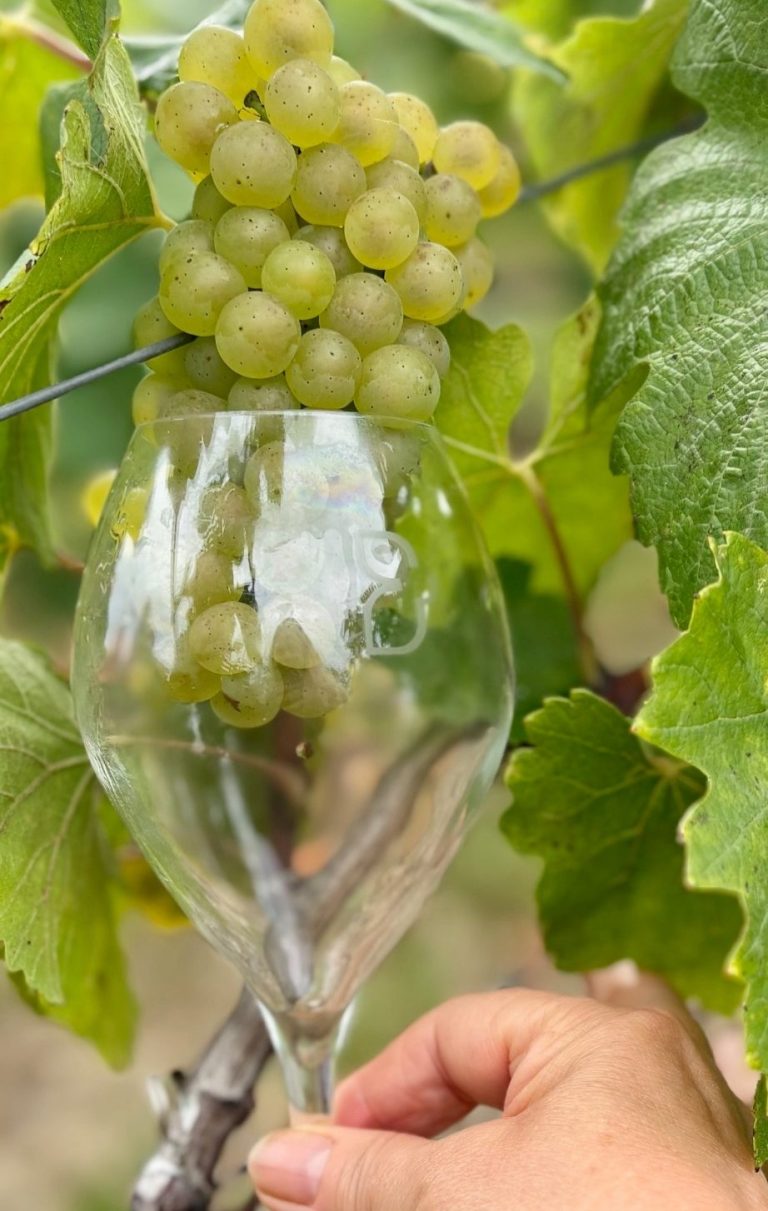
Chardonnay – elegance, acidity, and minerality
Pinot Noir – structure, power, and red fruit
Pinot Meunier – fruitiness and approachability
Together, and in varying proportions depending on place, they create Champagne’s remarkable diversity.
Did you know that Montgueux, in southern Champagne, is planted almost exclusively with Chardonnay despite the area being dominated by Pinot Noir?
From Grape to Bubbles
Champagne is the result of a precise and highly regulated craft.
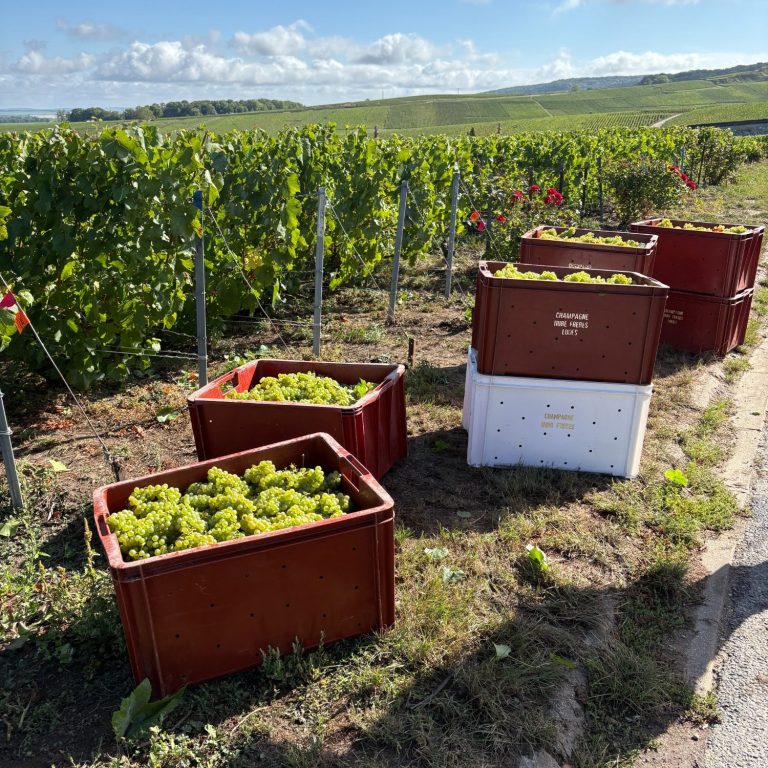
After harvest, the grapes are gently pressed. The juice ferments into a still wine, often neutral and restrained. Blending – assemblage – follows, where the winemaker shapes the style of the house or estate.
The second fermentation takes place in the bottle. Sugar and yeast are added, the bottle is sealed, and the bubbles are born. For several years, the wine rests on its lees in cool cellars, slowly developing complexity and texture.
Finally, the lees are removed through disgorgement, and a small dosage determines the wine’s final balance.
It is a time‑consuming process – but patience is Champagne’s most essential ingredient.
Tasting Champagne
Tasting Champagne is about much more than bubbles.
Start with the aromas. Citrus, apple, and white flowers are common, joined by notes of bread, nuts, and minerality. On the palate, balance is key – between acidity, fruit, and texture.
Observe the mousse: fine, persistent bubbles are a sign of quality. Feel how the wine moves across the palate – is it creamy, taut, energetic?
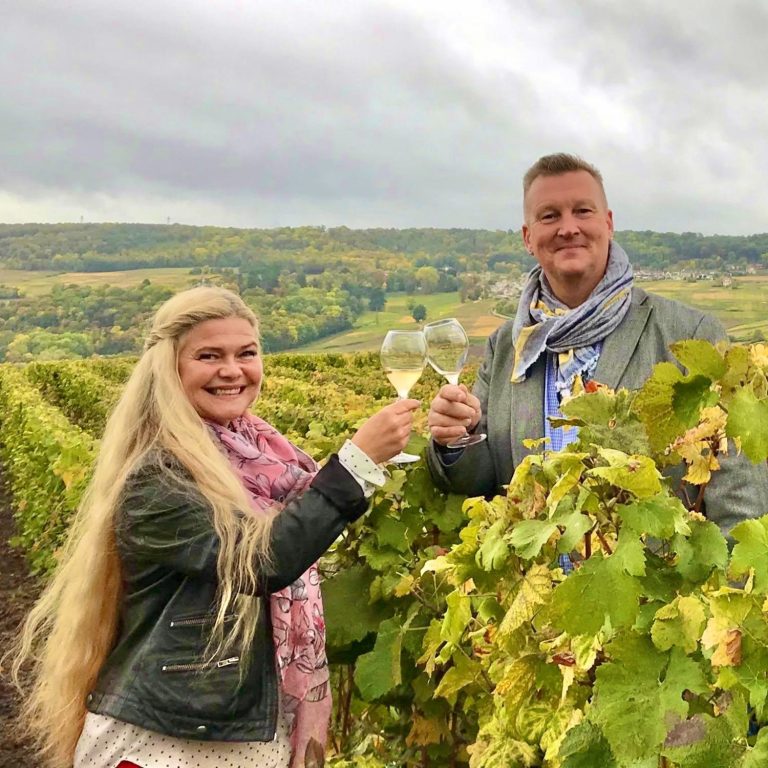
On journeys with Taste by Joy, Champagne is tasted in context: in the vineyard, in the cellar, and at the table. That is when the nuances truly come alive.
Meeting the Winemaker
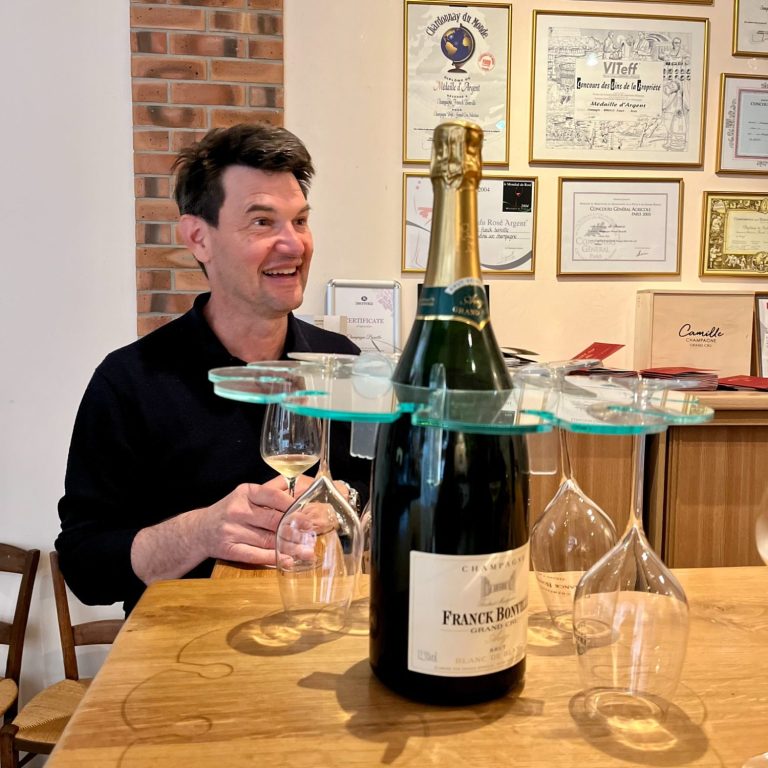
Behind every bottle of Champagne stands a person. Often, several generations.
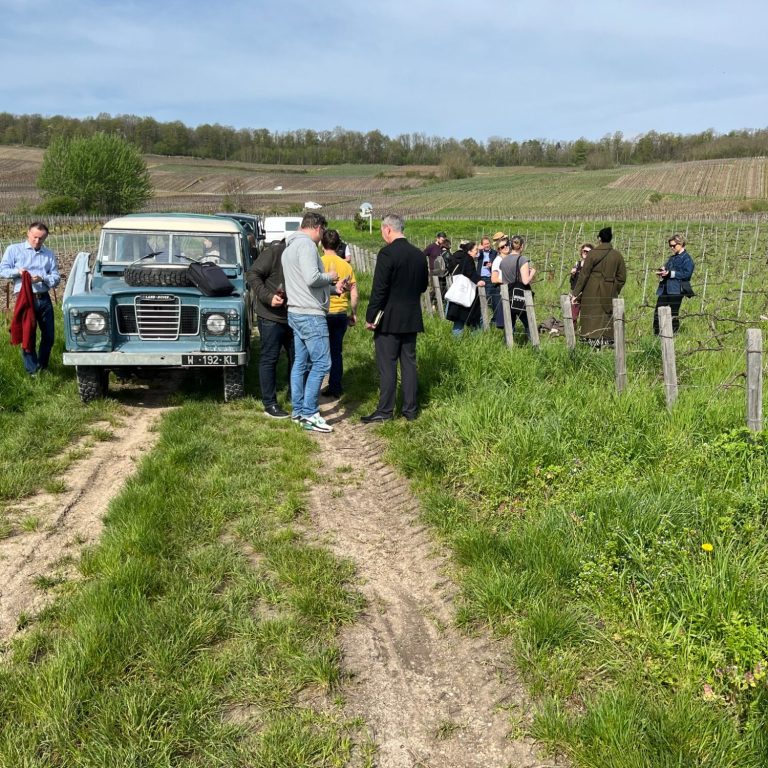
Meeting the winemaker offers perspective. Conversations revolve around weather, soil, decisions, and compromises. Pride is found in small details and in respect for tradition.
It is in these encounters that Champagne becomes personal. No longer a brand – but an expression of place and personality.
“Our goal is not to impress. It is to be honest to our land.”
Champagne & Food
Champagne is one of the world’s most versatile food wines.
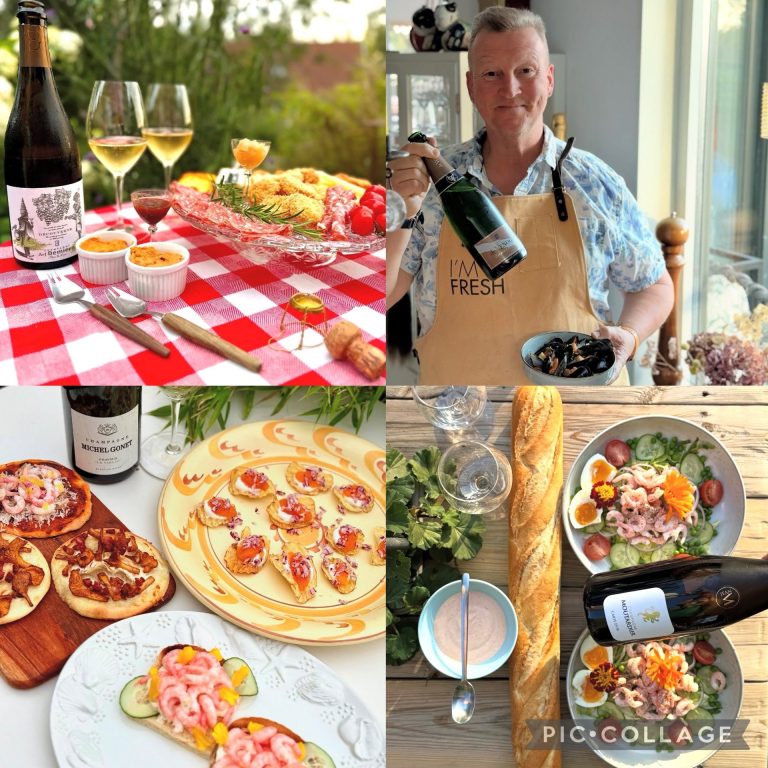
A fresh Blanc de Blancs elevates fish and seafood. A Pinot Noir‑driven Champagne pairs beautifully with poultry, mushrooms, and light meats. Rosé Champagne works exceptionally well at the table – not just as an aperitif.
And yes, Champagne with dessert can be magical – when sweetness is carefully matched.
Get more food matching inspiration on Instagram @tastebyjoy